


1 of 2 — Choose the dates
2 of 2 — Select the occupation and apply promotions
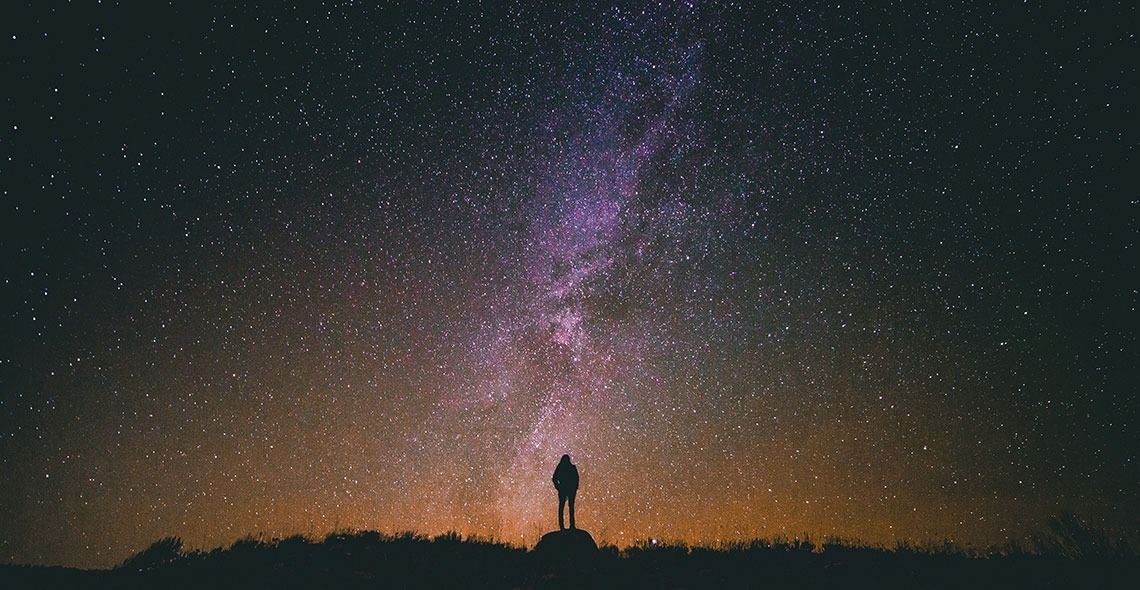
There are places in the world where the sky seems closer. Alqueva is one of them. Far from the hustle and bustle and light pollution of big cities, this is one of the rare destinations where the night regains all its splendor and the stars once again become the protagonists.
Far from the hustle and bustle and light pollution of big cities, this is one of the rare destinations where the night regains all its splendor and the stars once again become the protagonists.
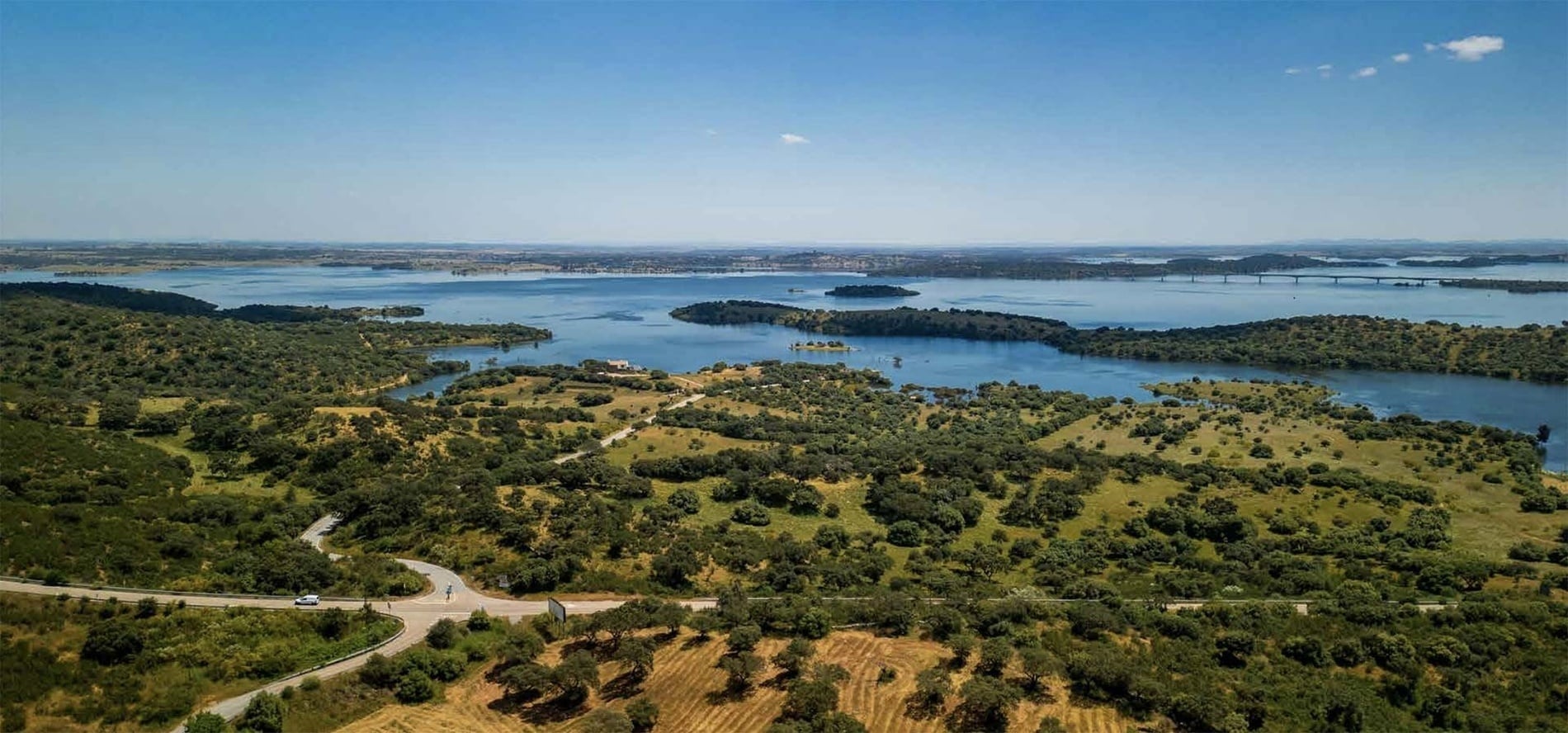
When the sun sets behind the ancient olive trees of Horta da Moura and darkness settles over Europe's largest lake, something magical happens that most people are no longer used to: stars are visible, not one or two, but thousands. And with them, the Milky Way – that luminous band that our "elders" knew by heart and that we, generations of screen light, have almost forgotten exists.
Alqueva is not just a rural tourism destination. It is one of the most important Dark Sky reserves in the world. And anyone who arrives at Horta da Moura, near the lake's shores, realizes this on their very first night.
What is a Dark Sky Reserve?
A Dark Sky Reserve is a registered trademark with European protection linked to the Dark Sky Association. This is an area with exceptional conditions of low light pollution, allowing for sky observation with a clarity impossible to find in urban areas.
Dark Sky Alqueva has its territory certified as a Starlight Tourism Destination, a certification awarded by the Starlight Foundation (See certificate here). Since then, the Alqueva Dark Sky project has been coordinating the region's municipalities to limit artificial lighting and create a network of certified sites for astronomical observation – and we have one less than 5 minutes away.
The classification is not symbolic, it is real. The sky over Alqueva presents magnitude values per arcsecond that rival those of the best observatories in the world – a rarity in a European country.
Why Alqueva has one of the best skies in Europe
Three factors combine in an almost unique way in Alqueva:
Low population density. The interior of Alentejo is one of the least densely populated regions in Europe. Few inhabitants mean little artificial lighting, and little artificial lighting means a horizon free of luminous halos.
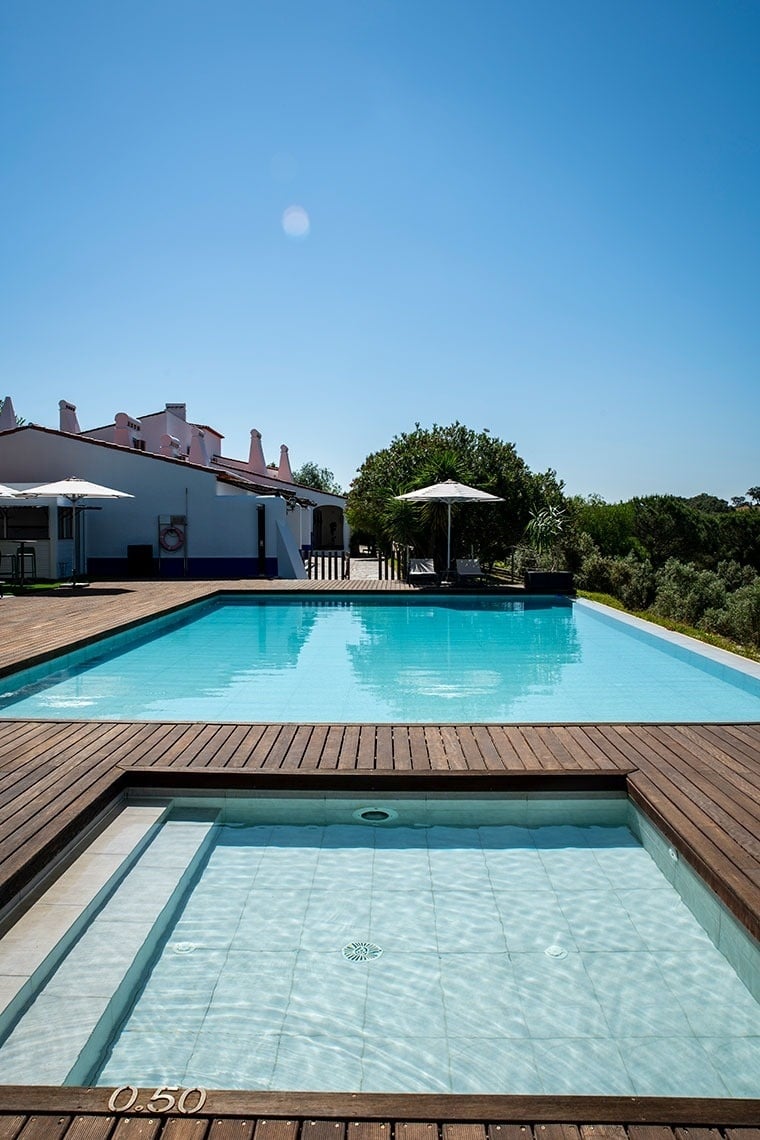
Altitude and climate. Alentejo has over 300 sunny days per year (which you can enjoy for walks or simply relaxing by our pool) and a dry atmosphere that minimizes humidity and atmospheric turbulence – two of the main obstacles to astronomical observation. Summer and autumn nights are especially clear.
The surface of the lake. The Alqueva's water surface creates an unexpected and difficult-to-describe beauty: it reflects the starry sky, doubling it. Observing the stars on the lake's shores is like observing two skies simultaneously – the real one above, and its reflection below. It's reminiscent of those photos that serve as computer wallpapers.
What can be seen in the Alqueva sky
Milky Way
The main attraction. Visible to the naked eye between March and October, peaking between June and August. The Milky Way appears as a diffuse, luminous band stretching across the sky from horizon to horizon – something that only about a third of the world's population can still observe from where they live.
Planets
Mercury, Venus, Mars, Jupiter, and Saturn are visible to the naked eye at different times of the year. With a simple telescope, it's possible to distinguish Saturn's rings and Jupiter's moons – the same view Galileo had in 1610. At that time, our oldest olive tree was already 2,000 years old.
Constellations
With no light pollution, all 88 constellations cataloged by the International Astronomical Union are observable throughout the year. Orion, Scorpius, the Southern Cross (visible in Alentejo at certain times), and binary stars are highlights for those starting to learn the sky.
Meteor showers
Alqueva is one of the best places in Europe to observe meteor showers. The Perseids (August) and the Geminids (December) are the most spectacular, with dozens of shooting stars per hour in a truly dark sky. It's worth keeping an eye on the calendar to plan a visit.
The Moon
Paradoxically, the full moon can be an obstacle to observing fainter stars – its light dissipates into the atmosphere and reduces the sky's contrast. New moon or crescent moon nights are the most recommended for those who want to see the Milky Way.
When to go: the Alqueva sky calendar
The 2026 astronomical calendar offers notable moments throughout the year. In January, the sky invites the observation of the Orion Nebula and star clusters, with a new moon on the 18th. February brings one of the most anticipated events: an annular solar eclipse, with Jupiter also visible, and a new moon on the 17th.
In March, a total lunar eclipse marks the arrival of spring, a time when the Milky Way begins to emerge on the horizon. April consolidates this trend, with mild nights and the Milky Way ascending, followed by May, when the galaxy gains progressive intensity in the sky. June is distinguished by its warmth and clear night sky.
July and August represent the best time of year for astrophotography and observation: the Milky Way reaches its zenith, the Perseids illuminate the night of August 12-13, and on the dawn of August 12, there is also a total solar eclipse – coinciding with the new moon in August.
With the arrival of autumn, September offers cooler nights and a stable sky, with the Milky Way still visible. October is marked by the Orionids, the meteor shower that peaks between the 21st and 22nd. In November, the Leonids enter the scene between the 17th and 18th, and on the 24th, a Super Full Moon is observed. The year closes with the Geminids, considered the most spectacular meteor shower of the year, peaking on December 13th and 14th.
Practical tip: always check the lunar phase before booking a night of observation. The best conditions occur in the 5 days before and after the new moon.
2026 is an exceptional year for astronomy. There will be four eclipses: an Annular Solar Eclipse on February 17th, a Total Lunar Eclipse on March 3rd, a Total Solar Eclipse on August 12th, and a Partial Lunar Eclipse on August 28th. The Total Solar Eclipse in August will be visible in parts of Europe – although the path of totality does not pass through Portugal, Alentejo will be able to observe a significant partial phase. It's worth being in Alqueva that night.
How to prepare for your observation night
Adaptation to darkness
Human eyes take between 20 and 30 minutes to fully adapt to darkness – a process called scotopic adaptation. During this period, the pupil dilates and the rods in the retina become progressively more sensitive. Avoid looking at your phone (sometimes it's difficult but worth it) or any source of white light. If you need illumination, use a flashlight with red light: it does not interfere with eye adaptation.
What to bring
- Blanket or sleeping bag (Alentejo nights, even in summer, can be cool)
- Reclining chair or mat (observing the zenith with a bent neck can get tiring quickly)
- Red light flashlight
- Binoculars (8x42 or 10x50 are ideal for beginners)
- Astronomy app on your phone (Stellarium or SkySafari – use it with the red light mode activated)
- Insect repellent (the lake shores are inhabited by mosquitoes on warm nights)
Useful Apps
Stellarium (free) allows you to point your phone at any part of the sky and identify stars, constellations, and planets in real time. It's the most used tool by amateur astronomers worldwide.
Clear Outside (free) provides specific weather forecasts for astronomical observation, including cloud cover, humidity, and atmospheric transparency.
Dark Sky Activities at Horta da Moura and in the region
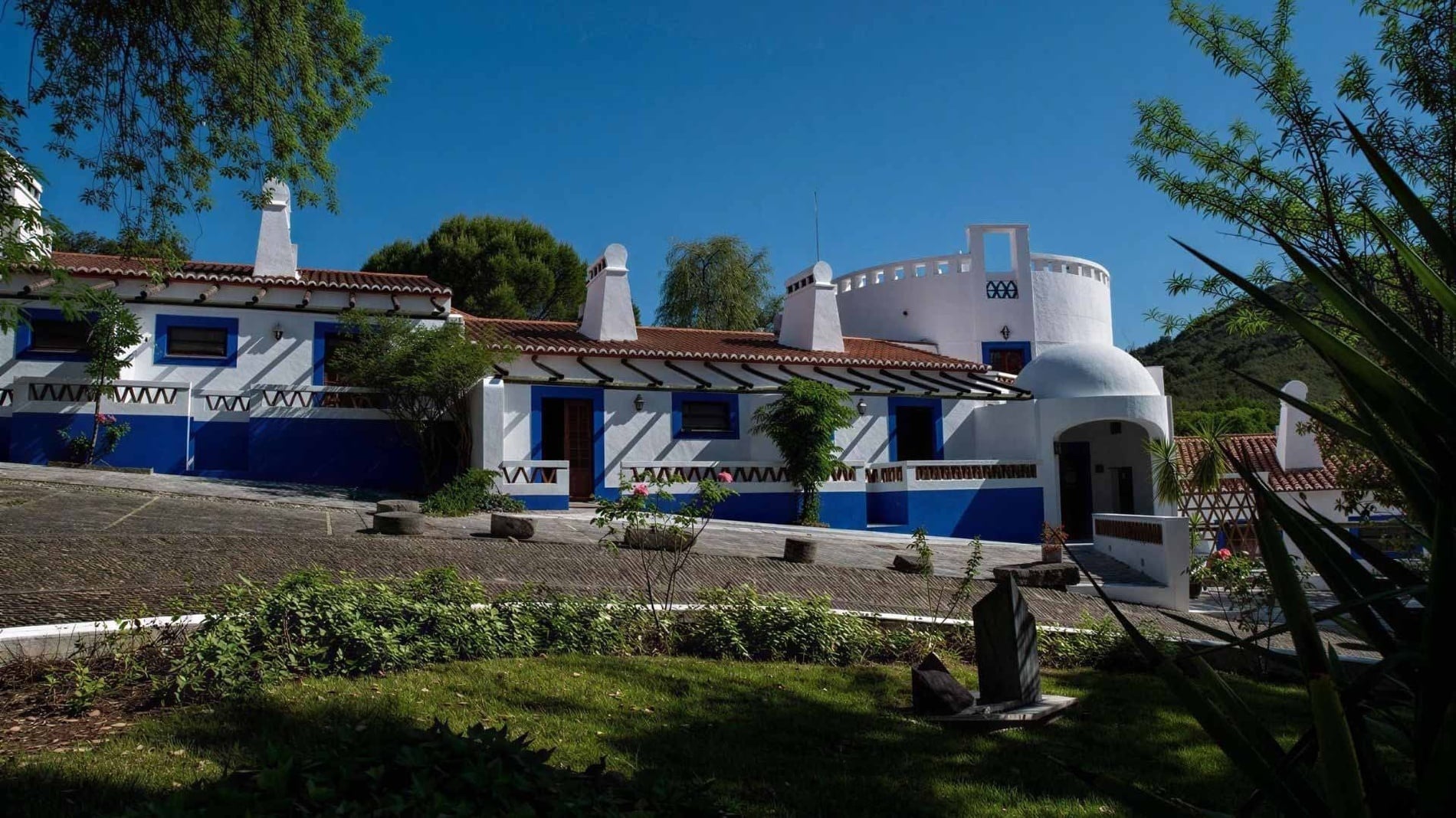
Horta da Moura, on the shores of Alqueva, is a privileged starting point for observation nights. The absence of artificial lighting on the horizon over the lake and the tranquility of the place create exceptional conditions – and the experience of observing the reflection of stars on the water's surface is simply unforgettable.
In the region, there are also specialized operators who organize guided astronomy sessions with professional telescopes, including presentations on the night sky and identification of celestial objects – ideal for families or for those who want to deepen their connection with astronomy. If you want to know more, consult the Observatory here.
Dark Sky and photography: how to photograph the Milky Way in Alqueva
The Milky Way can be photographed with any camera that allows manual control – including recent smartphones in Pro mode or Night mode. It's worth trying.
Basic settings (DSLR/mirrorless camera):
- ISO: 1600–6400 (depending on the sensor)
- Aperture: f/1.8 to f/2.8 (wide-angle lens)
- Shutter speed: 15 to 25 seconds (above this, stars will be streaked by the Earth's rotation)
- Focus: manual, at infinity (or slightly less)
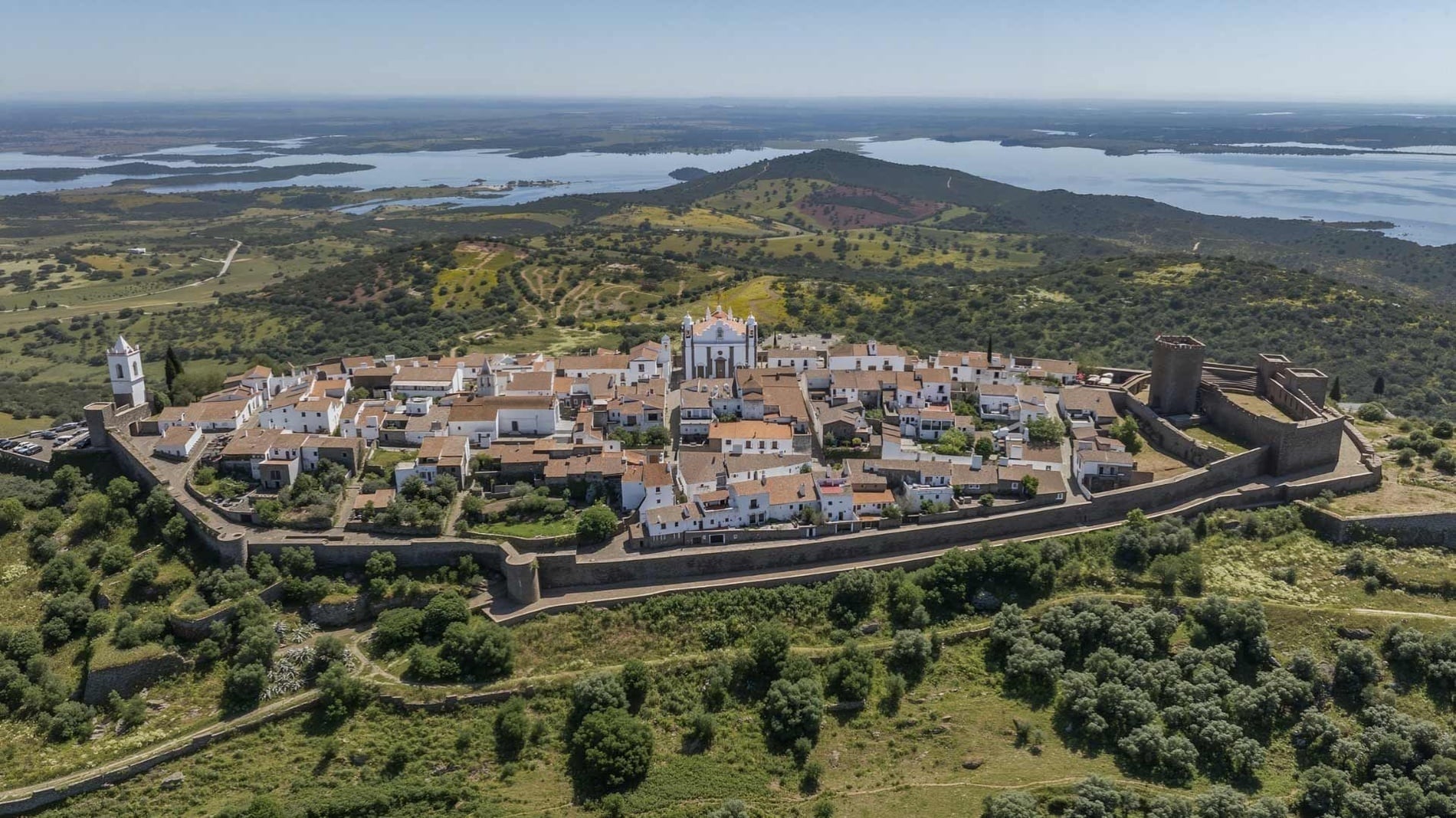
The best composition in Alqueva: the lake surface in the foreground and the Milky Way emerging over Monsaraz in the background. It's one of the most photographed compositions in Portuguese astrophotography – and for good reason.
A place where time has another scale
Observing the stars in Alqueva is not just a tourist activity. It's an exercise in perspective.
When you look at the Milky Way, you are seeing light that left the stars thousands of years ago. Some of those stars no longer exist – what we see is their luminous echo, traveling through space at 300,000 kilometers per second until it reaches our eyes, here, on the shores of a lake in Alentejo.
There is something profoundly human about that moment. Perhaps that is why, from generation to generation, people continue to look up – and if there's a good place to look, it's here in Alqueva.
At Horta da Moura, the sky is always waiting. And so are we.
Horta da Moura — Estrada de Monsaraz, km 4, Mourão.
Far from the hustle and bustle and light pollution of big cities, this is one of the rare destinations where the night regains all its splendor and the stars once again become the protagonists.
When the sun sets behind the ancient olive trees of Horta da Moura and darkness settles over Europe's largest lake, something magical happens that most people are no longer used to: stars are visible, not one or two, but thousands. And with them, the Milky Way – that luminous band that our "elders" knew by heart and that we, generations of screen light, have almost forgotten exists.
Alqueva is not just a rural tourism destination. It is one of the most important Dark Sky reserves in the world. And anyone who arrives at Horta da Moura, near the lake's shores, realizes this on their very first night.
What is a Dark Sky Reserve?
A Dark Sky Reserve is a registered trademark with European protection linked to the Dark Sky Association. This is an area with exceptional conditions of low light pollution, allowing for sky observation with a clarity impossible to find in urban areas.
Dark Sky Alqueva has its territory certified as a Starlight Tourism Destination, a certification awarded by the Starlight Foundation (See certificate here). Since then, the Alqueva Dark Sky project has been coordinating the region's municipalities to limit artificial lighting and create a network of certified sites for astronomical observation – and we have one less than 5 minutes away.
The classification is not symbolic, it is real. The sky over Alqueva presents magnitude values per arcsecond that rival those of the best observatories in the world – a rarity in a European country.
Why Alqueva has one of the best skies in Europe
Three factors combine in an almost unique way in Alqueva:
Low population density. The interior of Alentejo is one of the least densely populated regions in Europe. Few inhabitants mean little artificial lighting, and little artificial lighting means a horizon free of luminous halos.
Altitude and climate. Alentejo has over 300 sunny days per year (which you can enjoy for walks or simply relaxing by our pool) and a dry atmosphere that minimizes humidity and atmospheric turbulence – two of the main obstacles to astronomical observation. Summer and autumn nights are especially clear.
The surface of the lake. The Alqueva's water surface creates an unexpected and difficult-to-describe beauty: it reflects the starry sky, doubling it. Observing the stars on the lake's shores is like observing two skies simultaneously – the real one above, and its reflection below. It's reminiscent of those photos that serve as computer wallpapers.
What can be seen in the Alqueva sky
Milky Way
The main attraction. Visible to the naked eye between March and October, peaking between June and August. The Milky Way appears as a diffuse, luminous band stretching across the sky from horizon to horizon – something that only about a third of the world's population can still observe from where they live.
Planets
Mercury, Venus, Mars, Jupiter, and Saturn are visible to the naked eye at different times of the year. With a simple telescope, it's possible to distinguish Saturn's rings and Jupiter's moons – the same view Galileo had in 1610. At that time, our oldest olive tree was already 2,000 years old.
Constellations
With no light pollution, all 88 constellations cataloged by the International Astronomical Union are observable throughout the year. Orion, Scorpius, the Southern Cross (visible in Alentejo at certain times), and binary stars are highlights for those starting to learn the sky.
Meteor showers
Alqueva is one of the best places in Europe to observe meteor showers. The Perseids (August) and the Geminids (December) are the most spectacular, with dozens of shooting stars per hour in a truly dark sky. It's worth keeping an eye on the calendar to plan a visit.
The Moon
Paradoxically, the full moon can be an obstacle to observing fainter stars – its light dissipates into the atmosphere and reduces the sky's contrast. New moon or crescent moon nights are the most recommended for those who want to see the Milky Way.
When to go: the Alqueva sky calendar
The 2026 astronomical calendar offers notable moments throughout the year. In January, the sky invites the observation of the Orion Nebula and star clusters, with a new moon on the 18th. February brings one of the most anticipated events: an annular solar eclipse, with Jupiter also visible, and a new moon on the 17th.
In March, a total lunar eclipse marks the arrival of spring, a time when the Milky Way begins to emerge on the horizon. April consolidates this trend, with mild nights and the Milky Way ascending, followed by May, when the galaxy gains progressive intensity in the sky. June is distinguished by its warmth and clear night sky.
July and August represent the best time of year for astrophotography and observation: the Milky Way reaches its zenith, the Perseids illuminate the night of August 12-13, and on the dawn of August 12, there is also a total solar eclipse – coinciding with the new moon in August.
With the arrival of autumn, September offers cooler nights and a stable sky, with the Milky Way still visible. October is marked by the Orionids, the meteor shower that peaks between the 21st and 22nd. In November, the Leonids enter the scene between the 17th and 18th, and on the 24th, a Super Full Moon is observed. The year closes with the Geminids, considered the most spectacular meteor shower of the year, peaking on December 13th and 14th.
Practical tip: always check the lunar phase before booking a night of observation. The best conditions occur in the 5 days before and after the new moon.
2026 is an exceptional year for astronomy. There will be four eclipses: an Annular Solar Eclipse on February 17th, a Total Lunar Eclipse on March 3rd, a Total Solar Eclipse on August 12th, and a Partial Lunar Eclipse on August 28th. The Total Solar Eclipse in August will be visible in parts of Europe – although the path of totality does not pass through Portugal, Alentejo will be able to observe a significant partial phase. It's worth being in Alqueva that night.
How to prepare for your observation night
Adaptation to darkness
Human eyes take between 20 and 30 minutes to fully adapt to darkness – a process called scotopic adaptation. During this period, the pupil dilates and the rods in the retina become progressively more sensitive. Avoid looking at your phone (sometimes it's difficult but worth it) or any source of white light. If you need illumination, use a flashlight with red light: it does not interfere with eye adaptation.
What to bring
- Blanket or sleeping bag (Alentejo nights, even in summer, can be cool)
- Reclining chair or mat (observing the zenith with a bent neck can get tiring quickly)
- Red light flashlight
- Binoculars (8x42 or 10x50 are ideal for beginners)
- Astronomy app on your phone (Stellarium or SkySafari – use it with the red light mode activated)
- Insect repellent (the lake shores are inhabited by mosquitoes on warm nights)
Useful Apps
Stellarium (free) allows you to point your phone at any part of the sky and identify stars, constellations, and planets in real time. It's the most used tool by amateur astronomers worldwide.
Clear Outside (free) provides specific weather forecasts for astronomical observation, including cloud cover, humidity, and atmospheric transparency.
Dark Sky Activities at Horta da Moura and in the region
Horta da Moura, on the shores of Alqueva, is a privileged starting point for observation nights. The absence of artificial lighting on the horizon over the lake and the tranquility of the place create exceptional conditions – and the experience of observing the reflection of stars on the water's surface is simply unforgettable.
In the region, there are also specialized operators who organize guided astronomy sessions with professional telescopes, including presentations on the night sky and identification of celestial objects – ideal for families or for those who want to deepen their connection with astronomy. If you want to know more, consult the Observatory here.
Dark Sky and photography: how to photograph the Milky Way in Alqueva
The Milky Way can be photographed with any camera that allows manual control – including recent smartphones in Pro mode or Night mode. It's worth trying.
Basic settings (DSLR/mirrorless camera):
- ISO: 1600–6400 (depending on the sensor)
- Aperture: f/1.8 to f/2.8 (wide-angle lens)
- Shutter speed: 15 to 25 seconds (above this, stars will be streaked by the Earth's rotation)
- Focus: manual, at infinity (or slightly less)
The best composition in Alqueva: the lake surface in the foreground and the Milky Way emerging over Monsaraz in the background. It's one of the most photographed compositions in Portuguese astrophotography – and for good reason.
A place where time has another scale
Observing the stars in Alqueva is not just a tourist activity. It's an exercise in perspective.
When you look at the Milky Way, you are seeing light that left the stars thousands of years ago. Some of those stars no longer exist – what we see is their luminous echo, traveling through space at 300,000 kilometers per second until it reaches our eyes, here, on the shores of a lake in Alentejo.
There is something profoundly human about that moment. Perhaps that is why, from generation to generation, people continue to look up – and if there's a good place to look, it's here in Alqueva.
At Horta da Moura, the sky is always waiting. And so are we.
Horta da Moura — Estrada de Monsaraz, km 4, Mourão.